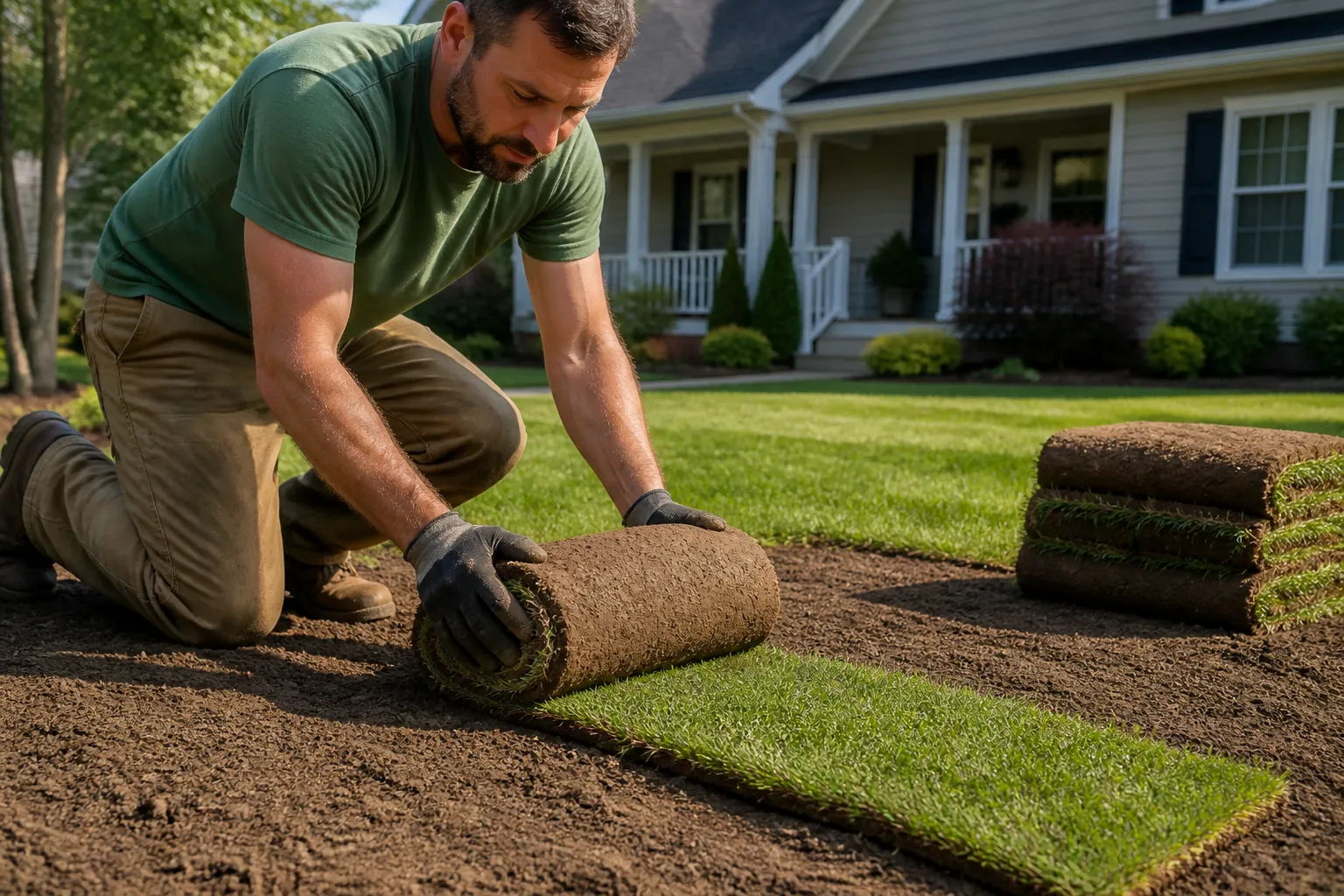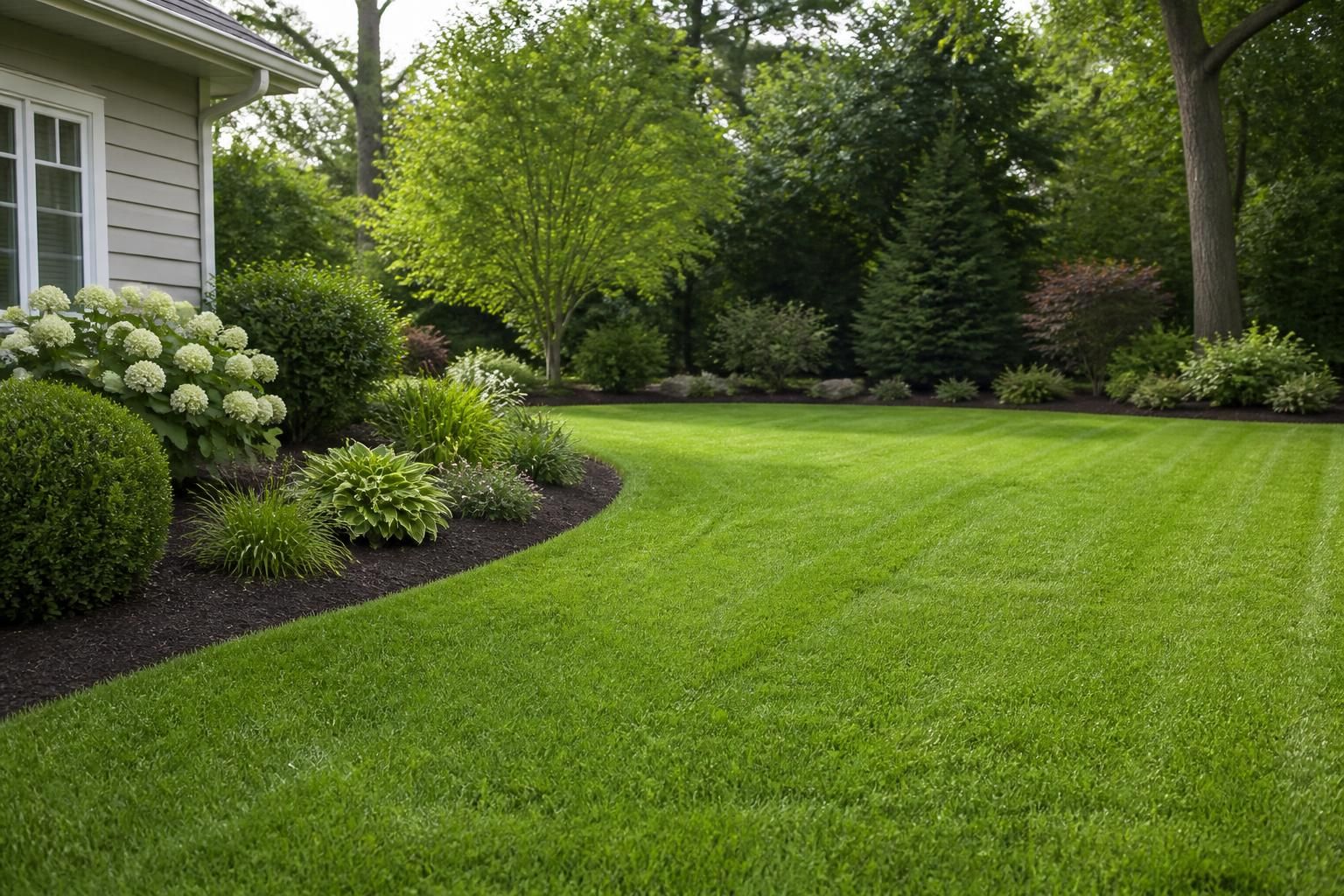
Rock Hill lawns do not all follow the same calendar. Bermuda, zoysia, centipede, and St. Augustine are warm-season grasses that grow most actively in warm weather. Tall fescue is a cool-season option used in parts of the Piedmont, especially where shade and site conditions suit it. The right timing for mowing, aeration, fertilizer, and seeding depends on which grass is already in your yard.
Start by identifying the grass before following a schedule. Clemson Extension’s guide to Carolinas turfgrasses explains how species and site conditions affect lawn care. Shade, soil, drainage, and the slope of your property can also change what works in Rock Hill.
Late winter and spring: prepare before growth takes off
Pick up branches and leaves, check that the mower blade is sharp, and look for compacted or bare areas. A soil test is a better starting point for fertilizer decisions than guessing from color alone. It can help show whether the lawn needs nutrients or a pH adjustment.
Warm-season grass may still be dormant in early spring. Wait until it has greened up and is actively growing before applying nitrogen fertilizer or carrying out major repair work. Applying nitrogen too early can push tender growth before the lawn is ready for it. For tall fescue, late winter is a different part of its growing season, so use a fescue-specific schedule instead of copying the warm-season calendar.
As mowing begins, set the mower for the type of grass you have and avoid removing more than about one-third of the blade in a single cut. If the lawn has become very tall, bring it down gradually over several mowings rather than scalping it at once.
Late spring and summer: care for actively growing grass
This is the main growth period for warm-season lawns. Mow often enough to keep the grass within its appropriate height range, and leave fine clippings in place when they are not clumping. Clippings return organic matter to the lawn and usually do not create thatch when the grass is being mowed regularly.
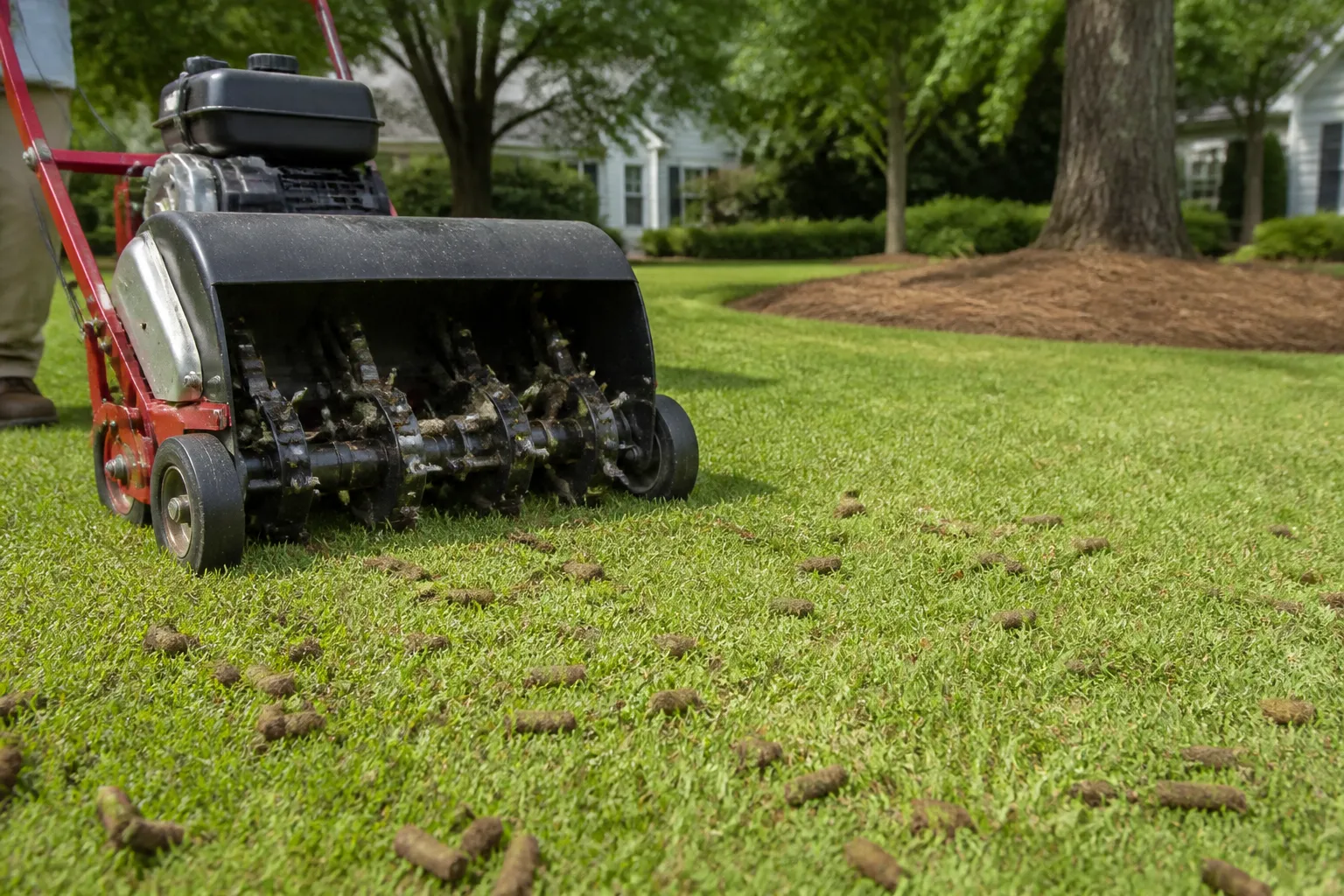
Warm-season lawns can benefit from core aeration when they are actively growing, particularly if water runs off instead of soaking in, the soil feels hard, or the lawn gets heavy foot traffic. Aeration is not automatically needed every year. Consider the lawn’s condition, and avoid disturbing a pre-emergent weed-control barrier that was recently applied.
Water according to rainfall, soil, and signs of stress rather than running a short irrigation cycle every day. Deep, less frequent watering encourages roots to grow farther into the soil. If footprints linger or the grass takes on a dull, bluish cast, the lawn may need water. Clay and sandy soils hold water differently, so adjust the timing to your yard and watch for runoff or standing water.
For tall fescue, summer heat is a stress period. Avoid treating it like Bermuda or zoysia: the cool-season lawn may need a higher mowing height and careful watering, while heavy summer fertilizing is generally not the right move. Keep notes about thinning or bare spots so you can address them when cooler weather returns.
Fall: repair cool-season lawns and prepare warm-season lawns
Fall is an important repair window for tall fescue in the Rock Hill area. Cooler weather gives seed time to germinate and establish before the next summer. Clemson Extension’s tall fescue calendar provides species-specific guidance for overseeding, mowing, watering, and fertilizing. Seed choice and soil preparation matter, and new seed needs consistent moisture while it establishes.
For Bermuda, zoysia, centipede, and St. Augustine, avoid late-season nitrogen applications that encourage tender growth as the grass approaches dormancy. Fall is also a common time to plan prevention for winter annual weeds. Follow the timing for the target weed and the product label, and do not aerate or seed immediately after a pre-emergent treatment unless the label and plan allow it.
Rake or mulch fallen leaves before they smother the turf. A light layer can be mulched with the mower, but thick, wet piles should be removed. If a warm-season lawn is turning tan as temperatures fall, that may be normal dormancy rather than a sign that it needs extra fertilizer.
Winter: protect the lawn without forcing growth
Keep the lawn clear of heavy leaf cover and avoid unnecessary traffic when the ground is saturated or frost-covered. Warm-season grass may look brown while dormant. It does not need to be forced green with nitrogen. Tall fescue can remain green and grow slowly in cool weather, but newly seeded areas still need attention if the weather turns dry.
A simple way to keep the schedule on track
- Identify the grass before choosing products or timing.
- Use a soil test to guide fertilizer and pH decisions.
- Adjust mowing and watering to the species, weather, and soil.
- Repair tall fescue in its cool-season window, and aerate warm-season grass while it is actively growing.
- Read product labels carefully, especially when seeding or treating weeds.
A lawn calendar is a guide, not a substitute for looking at the grass in front of you. For help matching routine care to your property, learn more about our lawn maintenance service in Rock Hill.